The Room We No Longer Share
Part 1 of 3
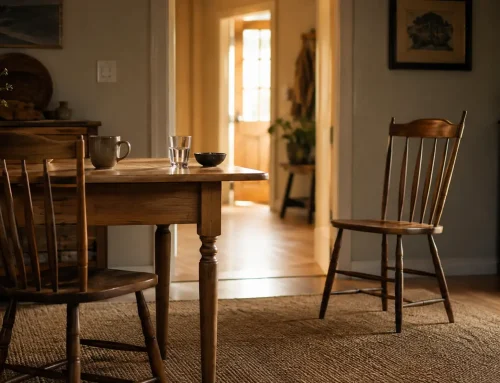
There used to be a room. Not literally, but functionally — a shared space where people who disagreed about important things could still talk to each other and be talked back to. A claim made in public was a claim that other people, reading the same paper or watching the same broadcast, could examine, push back on, accept, or ignore. The room was never neutral; powerful interests always had louder voices in it. But it was a room, and most adults in a society could find their way into it.
That room is gone.
What replaced it is a thousand smaller rooms, each calibrated to give its inhabitants more of what they already think, and arranged so that what people in the next room are saying is either invisible or rendered as caricature. The rooms are connected by a kind of weather system — viral fights, trending outrages, the constant churn of dunks and counter-dunks — louder than ever, building nothing. Heat without fire. Volume without exchange.
The condition is real, and it is not partisan. People across the political spectrum describe it, in their own terms — conservatives and progressives, old-fashioned liberals, independents. The diagnostic terms differ, but the underlying observation is the same: it has become much harder to have the kind of conversation that changes minds, including one’s own.
Why?
Three structural shifts deserve attention, because they explain more than character flaws or bad-faith actors do.
The first is the collapse of a shared informational ground. For most of the twentieth century, a small number of broadcast networks and newspapers set the rough boundaries of what counted as the news. The arrangement was imperfect — gatekept, slow, sometimes deferential to power — but it produced a working approximation of a common reality. People who disagreed politically were arguing about the same set of events. Today, two people can scroll their feeds for an hour and come away with not just different interpretations of the day’s events, but different events entirely. The shared ground has been replaced by parallel grounds, and the line between them is thick.
The second is a change in incentive structure. Public conversation now happens on platforms whose business is attention. What spreads on those platforms is what holds attention — engagement, time spent, things going viral — and that is not the same as good reasoning. A measured paragraph that grants the other side a point will not travel. A confident dunk will. Over time, this trains everyone, including thoughtful people, to perform the kind of speech that gets rewarded. Heat travels. Light is a luxury.
The third is the architecture of the rooms themselves. Algorithms reliably group people with people who already agree with them. The phenomenon has been studied enough that it no longer needs a name. The effect is severe: a person can spend years inside a feed that affirms their existing positions and never encounter a strong version of what people on the other side actually think. They encounter weak versions instead, served up to be defeated. Disagreement becomes a kind of television. The other side becomes, in a literal sense, a character.
These three shifts compound. Fragmented information plus attention-driven incentives plus algorithmic sorting produces what we have now: a public sphere that looks more vibrant than ever and works less well, as a tool for collective reasoning, than the version it replaced. The volume of speech has gone up. The number of minds being changed has gone down.
This is not a complaint about technology. The technology is doing what it was designed to do. The question worth asking is what it is doing to us, and what we are willing to do about it.
The German philosopher Jürgen Habermas spent a long career arguing that democracies live or die by the quality of their public conversation. By “public conversation” he meant something specific: a back-and-forth in which the people involved are willing to be persuaded by good arguments, and willing to answer for the ones they make. Persuasion of that kind requires a shared room. It requires that the people in the room treat each other as people who could, in principle, change their minds — and as people whose minds are worth changing. When those conditions disappear, what remains has the look of conversation, but it isn’t doing what conversation is for.
Habermas died in March, just weeks before this piece was written. He lived long enough to watch his ideal degrade in real time. We will return to his work in the next piece, because his analysis is unusually clear about what genuine conversation requires and what it does not survive without.
For now, what matters is the diagnosis. The hardening of our disagreements is not a mystery. The structural conditions that produce it have been building for two decades, in plain view, and naming them does not solve them — but it locates the problem clearly enough to ask the right next question.
The next question worth asking is what it would take to rebuild the kind of room in which arguments can once again do the work they are supposed to do.


Stay close to the conversation
We send a weekly digest of new posts community updates, plus essays, and events.
Sign up to stay in the loop.