The Referees Became Players
The institutions we built to tell us the truth — science, the university, the newsroom, the public agency — are failing at their one essential job, and no conspiracy is required to explain it. The cause is money and fear, working through ordinary people, one careful silence at a time. Nobody ordered it, and nothing about it required an order.
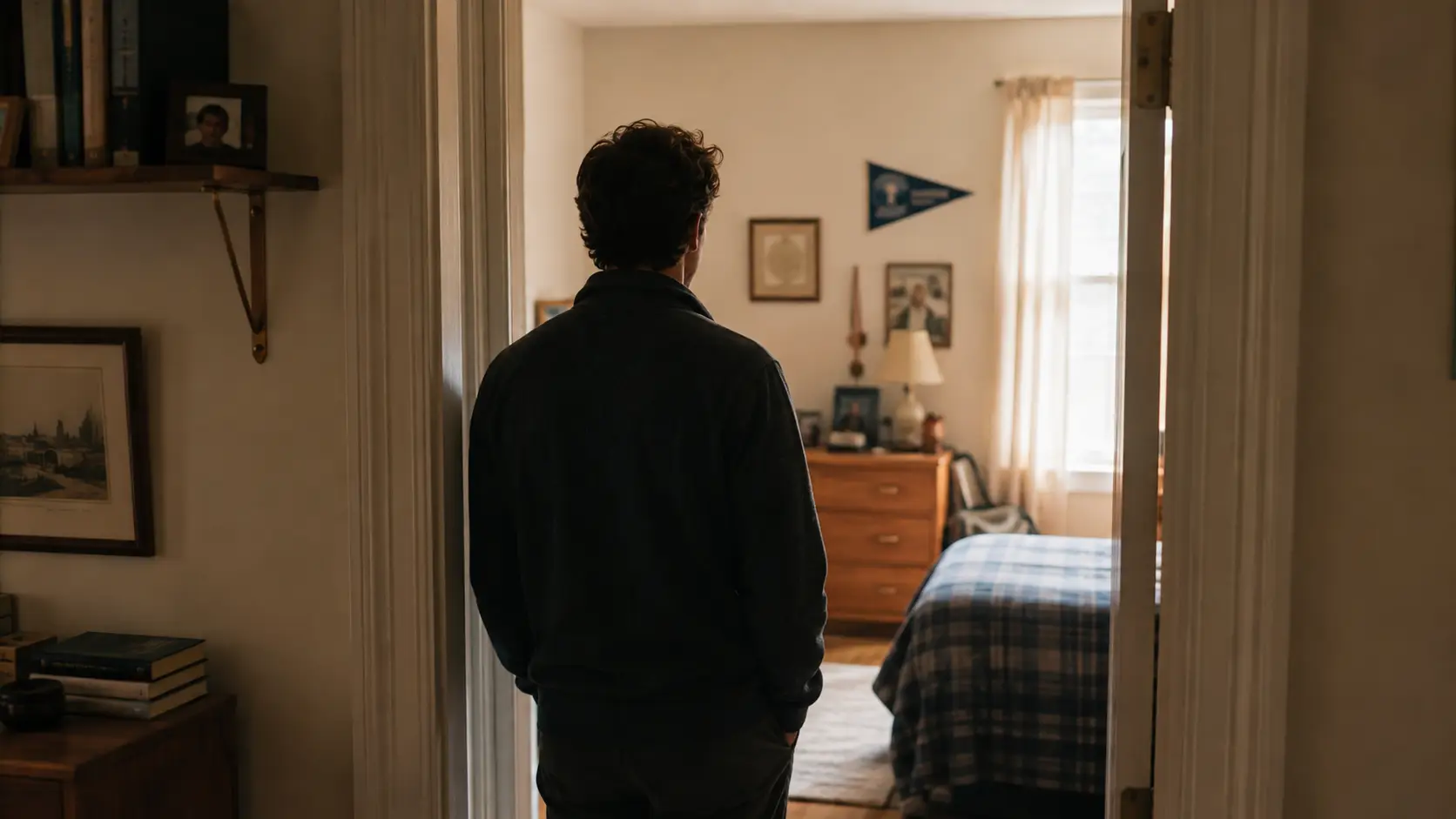
A researcher looks at her own data and sees where it points. She also sees what would follow if she wrote that part down: which colleagues would stop answering email, which funder would find the next application less compelling. So she writes the part that is safe, leaves the rest in the file, and tells herself, mostly honestly, that the finding needed more work.
No one told her to, and no one in the story is a villain. She is a person with a mortgage doing arithmetic any of us would recognize. The story does not require anyone to suppress a finding its own author has already decided not to write down.
We built institutions to do a job we cannot do for ourselves: a university that asks hard questions, a newsroom that audits power, an agency entrusted with public health, and underneath all of them the shared method of science, which exists to check the people using it. Each is a referee, and a referee is useful only for as long as it is not also a player. Our founding essay argues that too many have become players, and its diagnosis starts inside the skull: we run on two systems, and one is a threat detector built for predators, still fully operational. An institution is several hundred people rather than a building, each of them carrying that detector, now aimed at the only dangers left: the ones that register for a social primate with a career and a reputation that took thirty years to build.
Those dangers are real, because everyone has watched them land on somebody. Every so often a person is made an example of over a paper, or a joke, or a sentence written a decade ago, and the employer works out that the cost of defending the person exceeds the cost of the person. Nobody argues the point and nobody loses it; the person is simply removed. The practice belongs to no side; the 1950s ran it under a different name, pointed the other direction, and the country has since judged it a catastrophe.
But the person punished is not the point. A thousand people watched, learned exactly where the line is and what testing it costs, and did the arithmetic. Nothing happens next: no incident, no case, nothing anyone can point to, only a thousand small silences that never register as events. That is why both sides’ lists of victims, real as they are, miss the count that matters: the people it never had to happen to. Nobody has that number, including us.
So each person trims, or takes the safer version, or stays quiet in the meeting where speaking would cost, and each choice is small and reasonable. The aggregate is an institution that can no longer ask its own hard questions, having never decided to stop. Everyone inside independently concluded that asking was expensive.
And from the inside, the narrowing feels like standards rather than capture. The questions that stopped being asked come to seem unserious. No alarm distinguishes rigor from conformity; it feels like clarity either way. You have an institution in mind by now, and so does the reader who disagrees with you about everything, and it is a different one. You are both right, because the mechanism is not political. It runs inside the university and inside the outlet that exists to attack the university, and each sees it clearly in the other while staying blind at home.
We are an institution, and we have no exemption. The same arithmetic is available to us any given morning, and we will not be the first to notice if it wins.
The referees became players by money and fear compounding one reasonable silence at a time, and no decree was involved. The cost lands on everyone outside, left without a trusted arbiter at the exact moment one is needed, in a vacuum that fills with fear, conspiracy, and simple answers. We do not have the structural fix, and nobody does yet. What we have is the question, and a commitment to keep asking it where people can watch, including on the mornings when asking is expensive. Something Is Tearing Us Apart is where that argument starts.


Stay close to the conversation
We send a weekly digest of new posts community updates, plus essays, and events.
Sign up to stay in the loop.