The Policy
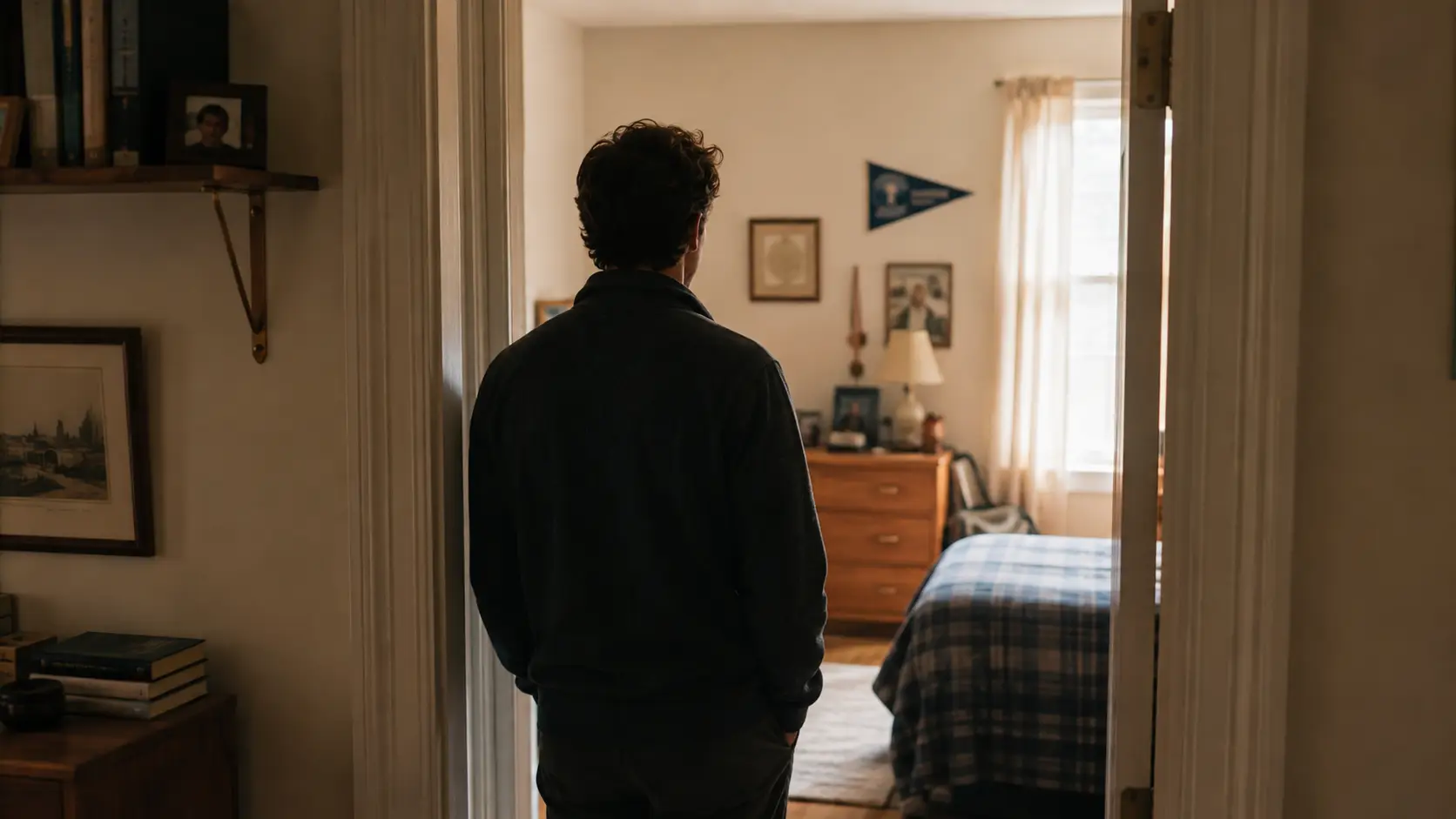
I have a policy I never remember making.
It shows up when someone says something and I have a real response, but before I can give it another thought comes in: What good would it do? Usually that is enough to stop me. I say something easier instead, or ask a safer question, or let the subject move on. The conversation stays pleasant and everyone gets to keep having the day they were already having.
I have done this for so long that it can feel like maturity. There are, after all, plenty of things that do not need to be said. Not every opinion deserves a hearing. Not every disagreement needs to become a conversation. Sometimes restraint is exactly the right choice, and I have no interest in turning honesty into an excuse for unloading every thought I have onto the people around me.
But I also know when that is not what I am doing.
Sometimes I am quiet because I am trying to manage what happens next.
I know what I think, and I suspect it matters. Maybe a friend is telling me a story about her marriage that doesn’t quite line up with what I’ve seen. Maybe someone I love is making the same choice again and I can hear how carefully she is explaining it to herself. Maybe I disagree with something a friend has said about his child, or his work, or why a relationship ended. These are not usually enormous revelations. They are ordinary moments when the honest response would make the conversation slightly harder.
That is when What good would it do? becomes very persuasive.
For years I heard that question as evidence that I was choosing my battles wisely. Lately I have started to hear something else in it.
When I decide that saying the true thing would do no good, I am making a fairly large decision on the other person’s behalf. I am deciding what they can hear. I am deciding how they are likely to react. I am deciding that the relationship is better served by a version of me who keeps this particular thought to herself. None of those decisions may be wrong, but I make them with remarkable confidence for someone who has usually not asked.
That bothers me.
The Practice of Dialogue calls one of its principles Beam 6: honest speech is what the other person needs from you.
I used to read that and immediately think of courage: say the hard thing, tell the truth, don’t hide. The longer I work with it, the less simple it becomes. Honest speech is not the same as bluntness, and it is not a license to say whatever you want because you have decided it is “true.” Sometimes what another person needs from you is silence. Sometimes they need time. Sometimes the thing you are itching to say is more about relieving your own frustration than serving them.
But sometimes they need you to stop managing them.
I have very good reasons for managing people. I don’t want to hurt them. I don’t want to be misunderstood. I don’t want to discover that I have badly misread the situation. I don’t want an easy lunch to turn into a difficult one. I don’t want somebody I love to look at me differently because I said the thing I had been thinking.
All of that is reasonable. Relationships can be damaged by careless honesty, and people do sometimes respond badly. I know that. I have seen it happen. I am not trying to talk myself into believing that every difficult conversation ends with two people hugging and thanking each other for their courage.
What I am trying to notice is how often I use the possibility of a bad outcome to justify never finding out.
Silence is convenient that way. You rarely get immediate evidence that it was the wrong choice. Nothing blows up. Nobody leaves. Tuesday remains Tuesday.
The cost is harder to see.
I can think of friendships in which I slowly became more careful without ever deciding to. I let one disagreement pass because it wasn’t worth it. Then another. I learned which subjects were easier to avoid and which versions of myself fit comfortably inside the relationship. None of this felt dishonest in the moment. It felt considerate.
Eventually, though, the other person knew a version of me that had been edited for ease.
That is not entirely their fault.
I had been doing the editing.
What makes this harder to defend is that I know how much I value the opposite when I am on the receiving end. Some of the people who have loved me best have told me things I did not want to hear. They have questioned my judgment. They have told me when I was being unfair. They have challenged stories I was telling about myself that were making it easier not to change.
I have not always responded beautifully. I have been defensive. I have argued. I have, on one memorable occasion, thanked someone warmly for their honesty and then spent the drive home constructing a devastating rebuttal I never delivered.
But I cannot think of a relationship I lost because someone who loved me told me the truth with care.
I can think of several that became deeper because they did. Eventually. After a reasonable cooling-off period during which I said nothing about it and everyone pretended that was normal.
That should probably count as evidence.
For some reason, I have been willing to believe that I can survive an uncomfortable truth while remaining much less certain about everyone else. I know friends who have survived illness, divorce, grief, financial collapse, children in trouble, careers coming apart, parents dying. Then I decide they may not be able to withstand one awkward sentence from me.
Maybe they can’t. People surprise us in every direction.
But maybe the fragility I am protecting is not theirs.
Maybe it is the fragility of the moment. The fragility of my own comfort. The fragile little arrangement in which I know how this conversation is going and would prefer not to lose control of it.
That distinction has been useful to me because it gives me a better question than What good would it do?
Now I am trying to ask: Why am I not saying this?
Sometimes the answer is good. It isn’t my place. The timing is wrong. I don’t know enough. The person needs a listener, not another opinion.
And sometimes the answer is simply that I don’t want the next five minutes to be uncomfortable.
Those are different reasons, and I need to stop pretending they’re the same.
I still run the policy. I’m running it in a couple of places in my own life right now. There are conversations I have been postponing because nothing is on fire and because I know how easy it is to postpone something when there is no deadline attached to it.
I also suspect there are people doing the same thing with me. They have thoughts they have edited out, questions they have decided not to ask, things they believe I would rather not hear. Maybe they are right. Maybe I have given them reason to be careful.
I would still rather know.
The One Conversation Challenge came out of this tension. It is not an invitation to empty the whole backlog or confront everyone you have ever been annoyed with. It is much smaller than that: one week, one person, one conversation you have been managing instead of having.
Maybe there is one sentence you keep deciding not to say.
I can’t tell you how it will land. I can tell you what I know from the other side of it. I have never lost anyone who told me the truth with care, and a few of those relationships are the only real ones I have.
They didn’t wait for the perfect moment. They just said it, usually badly, and I’m still here.
Part 8 of 14

Stay close to the conversation
We send a weekly digest of new posts community updates, plus essays, and events.
Sign up to stay in the loop.