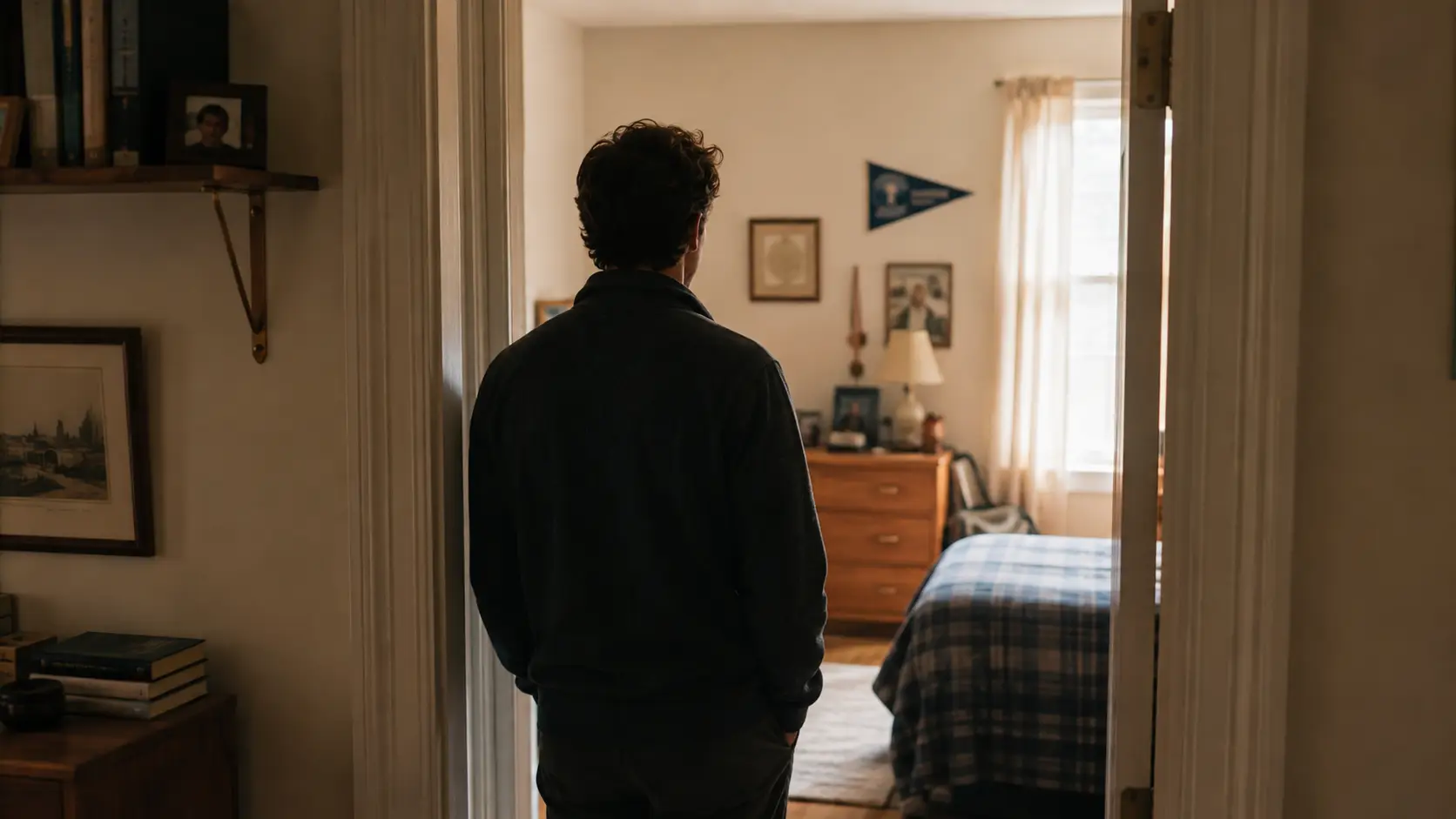
The Second and a Half
I pride myself on being open-minded, and I avoid conflict wherever I can. I don’t go looking for an argument, and when one catches me off-guard I feel an actual jolt of panic. I’m not good at articulating myself on the spot — small talk alone can set it off. I grew up somewhere that making peace was a survival skill, so I learned early to smooth things over before they sharpened. But sarcasm was nearly my first language, and it still surfaces when I’m not watching it.
So when I’m scrolling and a stranger says something I find not just wrong but obviously, willfully wrong, the panic doesn’t come. Something easier does. I don’t have to sit in the same room as this person or find the words in real time; I just get to decide about them. And I do, fast — wrong, and if wrong then probably not paying attention, and if not paying attention then not worth my time. The verdict takes about a second and a half. It’s the cleanest, least honest thing I do all day, and the distance is the only reason I can do it.
I want to tell you about the book that made me notice the second and a half, because I almost didn’t open it. It’s called Beyond the Politics of Contempt, it’s new this year, and from the outside it looks like a genre I’m tired of — the be-kinder book that arrives every election season to tell us all to breathe. I keep an eye-roll ready for those. I had it ready for about forty pages.
What disarmed me was who wrote it. Doug Teschner is a Republican who served six terms in the New Hampshire House and spent years overseas with the Peace Corps; Beth Malow is a neurologist who has voted Democratic her whole life. They met through Braver Angels, the cross-partisan bridge-building group, became real friends across almost everything they disagree about, and the book grew out of that friendship rather than the other way around. (A third author, Becky Robinson, rounds out the team.) Their claim, argued with more research than the genre usually bothers with, is that the thing tearing us up isn’t disagreement — it’s contempt, and contempt is a choice we keep making rather than weather we’re stuck in.
They hold a line I usually watch people erase. A republic is built to disagree; the disagreement is the machinery, not the malfunction. So the book isn’t asking anyone to meet in some mushy middle — the authors say outright that it’s “not about kumbaya and compromise.” What they’re after is narrower and harder: the moment I stop arguing with your position and start deciding you’re a worse kind of person for holding it. That’s the move they take apart. And they’re clear-eyed about the people who profit from teaching it to us — the conflict entrepreneurs for whom my contempt is a dependable revenue stream.
The disarming part is that every time the book names the reflex, it turns first on its own authors. Doug describes an evening in 2017 when he set up a lawn chair near old friends at a community concert, let the talk drift to how they’d voted, and watched it curdle — and left disappointed not in them but in himself. Beth, the lifelong Democrat, describes staying in a conversation with a woman who was a gun owner and trainer until she could honestly say she understood why guns mattered so much to her — not conceding a policy inch, just seeing the person underneath the position. That’s the whole method in one move: understanding is not surrender.
I kept waiting for it to become a book about them — the people actually wrecking things. It kept being a book about me, and my second and a half.
I won’t oversell it. It’s self-published, and it comes out of the organized bridge-building world, which some readers on both ends have already decided is naïve or quietly partisan. If you’ve soured on that world, you’ll bring that to the first page. What kept me reading is that the book asks something of the reader instead of the reader’s enemies — which makes it the rare civic book I could act on without waiting for anyone else to move first.
And you don’t need to buy it to begin. The thing it’s really about is smaller than a book: one honest conversation with someone you’ve quietly filed under “against.” That’s all our One Conversation Challenge asks — one conversation, chosen on purpose. It’s where I’m starting.


Stay close to the conversation
We send a weekly digest of new posts community updates, plus essays, and events.
Sign up to stay in the loop.