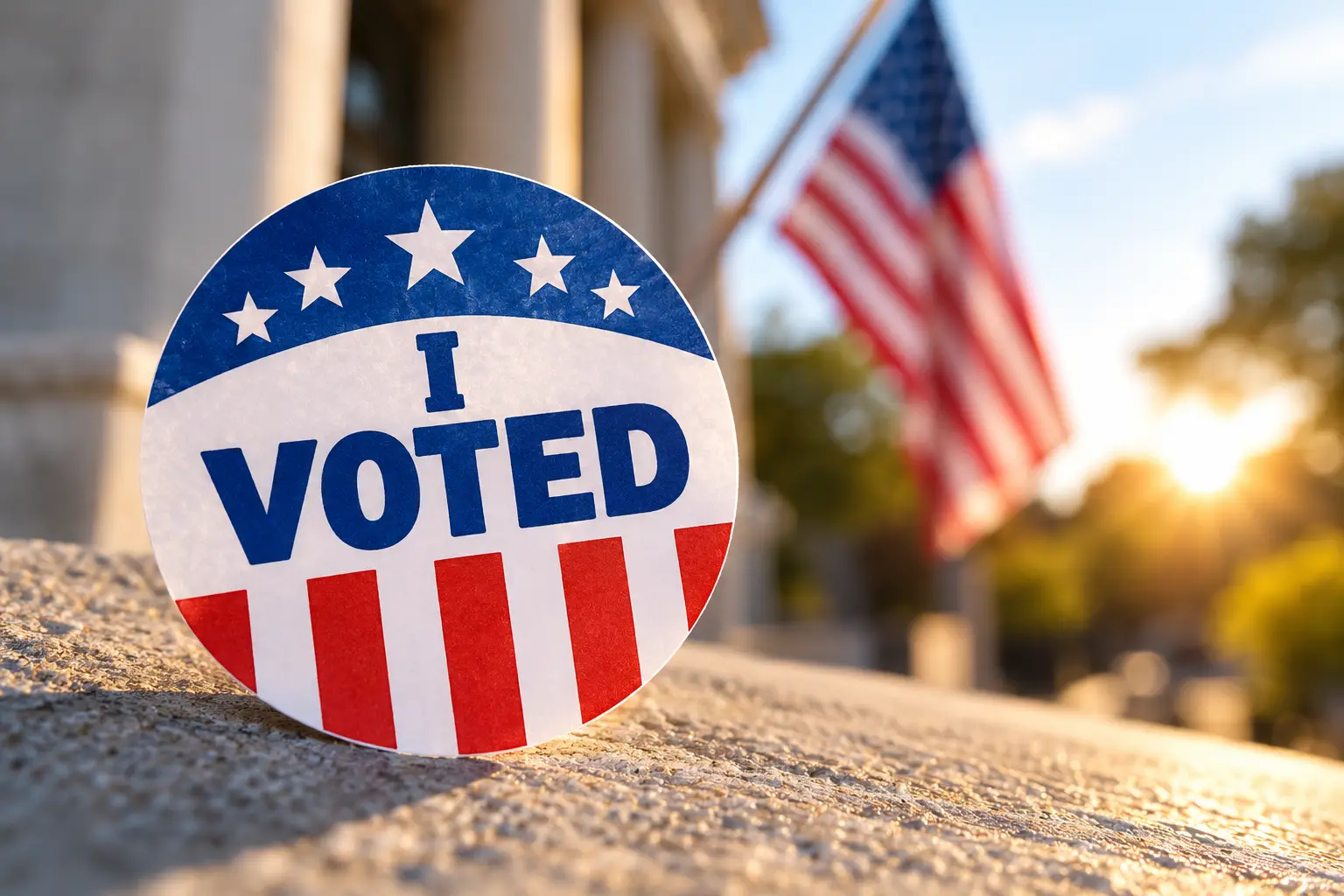
The Words They Reached For
Some thoughts on election-night speeches, and what comes after
Of all the things I read after Tuesday’s election, the line I remember best came from someone who lost.
Republican Congressman Jeff Van Drew had just lost his South Jersey seat to Democrat Zack Mullock, the mayor of Cape May. He conceded in Sea Isle City about three hours after the polls closed, before the Associated Press had called the race. “He is and will be our new congressman for the next two years, and I wish him the very best,” he said. “I wish him success. His success is our success.”
I liked that. Quite a lot, actually.
Van Drew hadn’t suddenly become a Democrat. I doubt he’d changed his mind about much of anything. But he understood that the success of the person representing his district would matter to the people living in it, including the ones who had voted for him.
I’ve spent more time than usual this week reading election-night speeches. Once I started looking past the results, I got interested in what candidates chose to say when the campaign was finally over.
Some of it was predictable. Politicians are good at saying what people expect them to say. Still, there were moments worth stopping on, especially among those who had lost.
In Maine, Republican Bobby Charles congratulated Democrat Hannah Pingree, who had defeated him in a three-way race for governor. “Your success is Maine’s success,” he said. “We will be watching, all of us. We will hope for the best, but we will be prepared for what follows.”
He wished her well and made it clear he would be paying attention. The election hadn’t erased their differences, and nobody needed to pretend otherwise.
In Vermont, Amanda Janoo, the Democratic/Progressive challenger to Republican Governor Phil Scott, told her supporters that the race had been about something other than him. “My real opponent throughout this whole campaign has never been another candidate or even another party. The opponent has been cynicism.” She had wanted, she said, “to run a campaign that could remind people of their own power to change things.”
Janoo had lost, and she didn’t seem to regard the campaign as wasted. If people had become more engaged, or had started to believe they could make a difference, something worthwhile had happened. I imagine that takes some perspective when you’ve just spent months working toward an outcome you didn’t get.
Of course, concession speeches are political speeches. Candidates have reputations to protect and sometimes future elections to consider. I’m under no illusion that a few generous sentences tell us everything about someone’s character. I’m also not convinced we need to be suspicious of every gracious word because a politician said it.
And then there’s winning.
In Vermont, Scott won a sixth term on the same night Democrats regained veto-proof majorities in the Legislature. “We will enter the next two years with some significant differences in our political views and the approaches to our government,” he said. “But I want Vermonters to know this: My commitment to you has not changed.”
That should make for an interesting couple of years.
In Texas, Democrat Gina Hinojosa defeated Republican Governor Greg Abbott and used part of her victory speech to set a limit on her own side. “This governor’s office does not belong to me, it does not belong to my party,” she told supporters. “We did not end one era of single party rule just to usher in another.”
I hope she means it. I hope all of them mean it, frankly. We’ve become very comfortable demanding accountability from people we disagree with. Expecting it from our own side takes considerably more effort.
James Talarico, newly elected to the U.S. Senate from Texas, put it this way: “People across the political spectrum are hungry for a different kind of politics. Not a politics of hate, not a politics of fear, not a politics of division, but a politics of love.”
I’ve been thinking and writing about fear and love for a while now, so naturally I noticed.
I also know that talking about love in politics can make people roll their eyes. The word gets thrown around casually, and it can sound a little ridiculous in the middle of an argument over taxes or immigration. But love, as I understand it, makes serious demands. It doesn’t relieve us of the responsibility to think clearly, or to disagree when something matters. It asks us to consider what we owe the person on the other side of the disagreement.
And sometimes I’d really rather just be right.
Here in Arizona, our new lieutenant governor-elect, John Giles, offered a more practical version at their victory rally the next evening. Giles is a former Republican mayor of Mesa who became an independent and ran alongside Democratic Governor Katie Hobbs. He promised to work just as hard for the people who hadn’t voted for their ticket, and then offered a bit of municipal wisdom: “There’s no Republican or Democratic way to fill a pothole.”
Having been raised in the Chicagoland area, where there are only two seasons … winter and construction … I’ve lived through more local road construction projects than I can count. I can appreciate the sentiment.
Giles wasn’t asking anyone to abandon their convictions. There are plenty of questions on which reasonable people will go on disagreeing. There are also potholes, and someone eventually has to fill them.
A woman in Greensburg
Adam Hamilton, a Methodist pastor newly elected to the U.S. Senate from Kansas, was interviewed by NPR the morning after the election. He described meeting a woman in Greensburg during the campaign whose family had been damaged by political disagreement. As he recalled it, she had one request:
I really want you to help us remember that we’re fellow human beings.
I wish I knew more about that conversation. What had happened in her family? Were they still speaking? Or was everyone still showing up for holidays, carefully steering around certain subjects and hoping nobody brought up the election? I suspect a lot of people heard her words and recognized their own families.
Last month, Scott McIntosh and I hosted Human Flourishing’s Founding Salon in Mesa. We spent the day talking about fear and love, about how people lose and recover their sense of agency, and about what it takes to understand someone whose experience or convictions differ from our own. One of our questions was: What would it take for people who see this differently to stay in the room?
We heard some remarkable stories that day. People talked about relationships that had been tested and conversations they wished had gone differently. Some described moments when they had managed to understand another person despite their disagreement.
I think about those conversations often, and about how much effort it takes to stay curious once I’m convinced I’ve already understood the situation. I know that feeling well.
It’s one of the reasons the Practice of Dialogue matters so much to me. Its third beam is short: Disagreement does not make the other person an enemy. I believe it wholeheartedly. I also get plenty of opportunities to discover how much practice it takes.
What happens after the speeches?
I don’t think we can draw sweeping conclusions about the American electorate from the speeches I’ve collected. I went looking for examples of respect and shared responsibility, and I found them. Someone else could assemble a different collection from the same election and tell a different story.
These candidates came from different parties, and some had spent months working against one another. Several had just lost. And they spoke about accepting the judgment of voters and about a responsibility that extends past their own supporters.
Hinojosa will have plenty of chances to show what she meant about her own party. Talarico will sit beside people whose picture of the country’s future looks nothing like his.
I’d like to come back to these remarks once they’ve had some time to govern, and see what they did with the difficulties they were bound to encounter. And I hope we’re willing to recognize an honest effort to live up to those words, even from politicians we don’t particularly like. That might turn out to be a test of our own commitment to truth over tribe.
The woman in Greensburg asked Adam Hamilton to help Americans remember that they’re fellow human beings. It’s a reasonable thing to ask of someone seeking public office, and I hope he takes it seriously. I’ve wondered what she might ask of the rest of us.
Many of us have had our own version of that conversation, around a dinner table or in a group text that went quiet. Some of us were delighted by Tuesday’s results. Others were deeply disappointed. We’ll go on disagreeing about what the results mean and what should happen next, and we’ll still be sitting across from one another at Thanksgiving.
I went looking for the words politicians reached for once the votes were counted.
When the votes were counted, what words did you reach for?


Stay close to the conversation
We send a weekly digest of new posts community updates, plus essays, and events.
Sign up to stay in the loop.